Technology & innovation
Accelerated Computing in AI-Powered Business Transformation
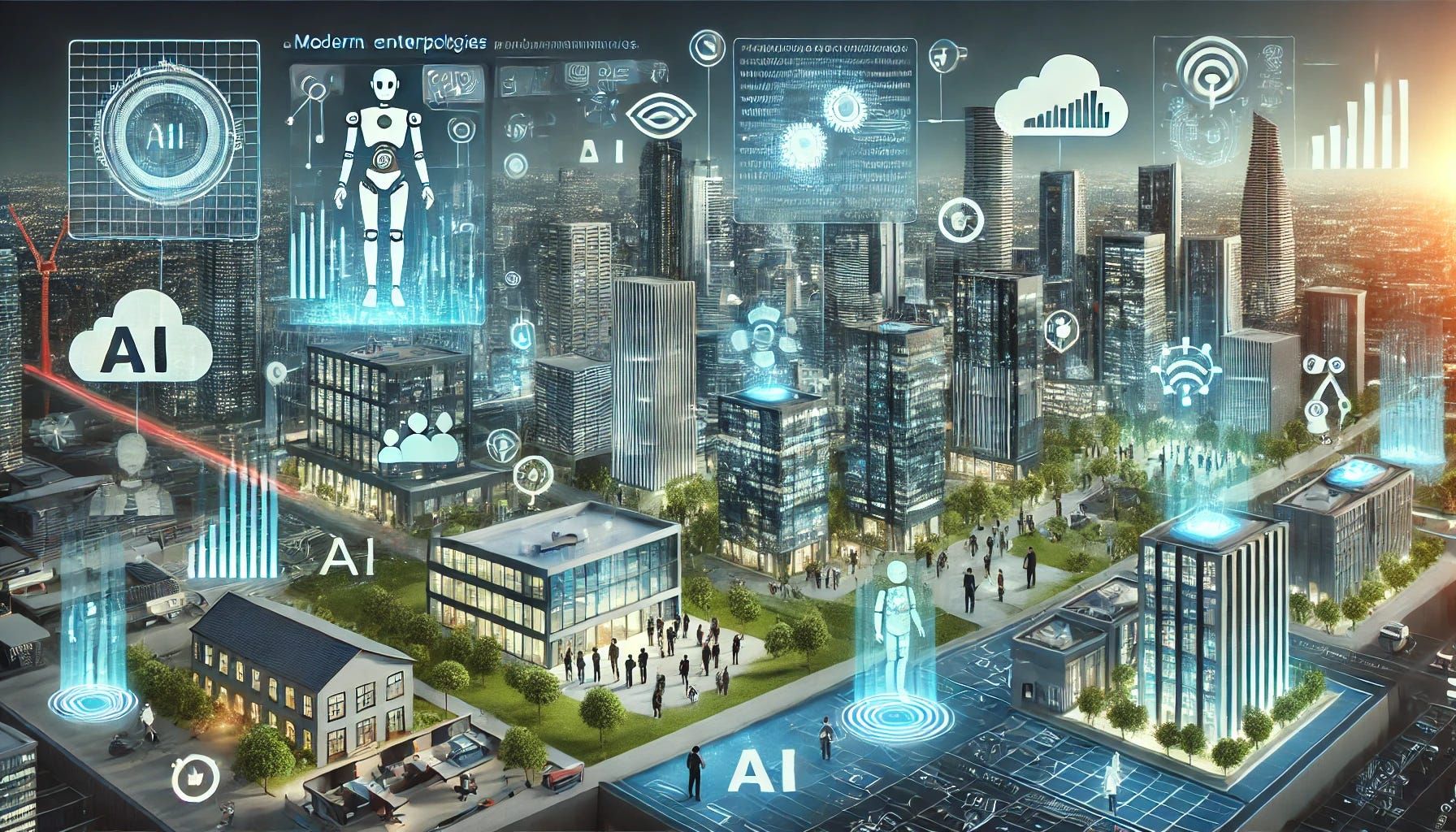
The transformative power of digital technologies is reshaping the landscape of modern business. With the advent of these technologies, a new type of organization has emerged — one that leverages data, analytics, AI, and automation to thrive in today’s competitive environment. You might think, “This isn’t new. What are you trying to say?
Stay with me. Across the board, we are witnessing an unprecedented increase in investments in AI, computing power, data storage, and skilled resources. We are at a singular moment (another, yet again) with the advent of mainstream AI, where diverse paradigms are shifting, challenging what we thought was “law of nature”. The rules of competition are evolving and it is crucial for managers and executives to prepare with the right tools for this new era.
In the traditional industrial paradigm, scale, scope and learning were achieved by meticulously refining efficient and repeatable industrial processes, increasing production volumes, enhancing product complexity, and learning from the process. It often took decades before organizations could successfully manage those challenges. All the while, decision-making was in the hands of managers. Alongside such achievements, came extremely complex operating models, and eventually, scale began to deliver diminishing returns.
On the other hand, digital organizations, operate fundamentally different from traditional enterprises. Marco Iansiti and Karim R. Lakhani, in their book “Competing in the Age of AI,” argue that digital organizations are transforming the critical path for delivering their products or services by minimizing human intervention on it. These organizations leverage vast amounts of data and advanced analytics to generate insights, make predictions, and automate processes, enabling new operating models. These models remove traditional barriers to scalability, scope, and innovation leading to almost unconstrained growth, continuous innovation and learning from their data in ways that traditional organizations cannot match.
The Shifting Nature of Competition
Iansiti and Lakhani introduced the term “collisions” to describe instances where organizations with digital operating models compete in spaces traditionally dominated by conventional organizations (e.g., Uber vs. traditional taxi companies). And because digital organizations operate under different dynamics, these collisions are reshaping industries and competition.
It appears that competitive advantage increasingly lies with organizations that can effectively industrialize data collection, analytics, and decision-making in what they call the “AI factory.” Their research identified four common traits among organizations with digital operating models:
- They are proficienct in collecting and processing vast amounts of data
- They have developed advanced models for data analysis, insights generation, and automated decision-making
- They have an exceptional ability to rapidly test and iterate new concepts and ideas
- They leverage a powerful infrastructure to enable the deployment and scaling of AI applications
More than two decades ago, Jeanne W. Ross, Peter Weill, and David C. Robertson identified similar emerging traits in highly profitable organizations. They proposed that those organizations were digitizing their operating models by building what they called the “Foundation for Execution,” which, in my view, laid the groundwork for what Iansiti and Lakhani now describe as the “AI Factory.” You can read about their research and the proposed framework in their book “Enterprise Architecture as Strategy.”
The Imperative to Invest in AI
Given AI’s profound impact on competition it is apparent that traditional firms must rethink their strategies and operations. While many companies are already on this path, for most, delaying AI-driven transformation could result in missed opportunities and obsolescence. Investing in AI is not just an option but an imperative for staying competitive.
Leveraging AI Amid Rising Challenges
Adopting AI comes with significant technical and organizational challenges beyond those in strategy. Processing AI workloads requires immense computing power and efficient parallel processing. AI models, especially deep learning algorithms, demand vast computational resources to handle complex operations and large datasets. This need for high-performance computing infrastructure often translates into substantial investment in advanced hardware, such as GPUs and TPUs, which are optimized for parallel processing tasks.
Moreover, ensuring the scalability and efficiency of these systems is a complex task, requiring sophisticated architecture designs that can effectively distribute and manage workloads across multiple processors. Another critical consideration is that with increased computing power, there are increased energy requirements, which is a growing concern, both in terms of operational costs and environmental impact. A Goldman Sachs report estimates an energy crunch due to AI’s growing power demands, projecting $1 trillion in investments for chips, infrastructure, data centers, and power grids in the coming years.
The IBM Global AI Adoption Index 2023 estimated that around 82% of large organizations had deployed AI technology or were exploring its use, up from 76% in 2022, despite the high energy costs, increased regulatory constraints to achieve net-zero emissions, and the inherent limitations of CPU-based computing. Achieving scalability and the flexibility required by AI — to build the infrastructure of the AI Factory — sustainably involves a two-pronged strategy: using green energy to power data centers and deploying accelerated computing. Accelerated computing leverages parallel computing techniques and the use of GPUs, which is essential in today’s landscape.
The Role of Accelerated Computing
Accelerated computing, leveraging parallel processing, significantly enhances performance and enables greater capacity for AI and other demanding applications. By using multiple processing units simultaneously, this approach handles complex computations far more efficiently than traditional serial processing. For example, NVIDIA’s general-purpose accelerated computing platform is designed to support a wide range of applications such as climate simulation, robotics, large language models, and graphics, making it an ideal foundation for modern AI-driven operations.
In addition to NVIDIA, other platforms like Google’s Tensor Processing Units (TPUs) and AMD’s Instinct accelerators also play crucial roles in parallel processing. These technologies offer robust solutions for deep learning and machine learning tasks, providing high performance and flexibility. Google TPUs are specifically designed to accelerate machine learning workloads, particularly for TensorFlow applications, while AMD’s Instinct accelerators deliver scalable performance for data centers and edge computing.
By integrating these advanced parallel processing technologies, organizations can effectively meet the demands of AI workloads, ensuring scalability, efficiency, and superior performance.
Benefits of an Accelerated Infrastructure Strategy
Adopting an accelerated computing strategy offers numerous benefits that significantly enhance an organization’s capabilities beyond drastically improving computational speed and efficiency through simultaneous operations. High-performance hardware, such as GPUs and TPUs, further boosts system performance, making it easier to handle increasing data volumes and more complex algorithms. This scalability is supported by flexible infrastructure options, accommodating on-premises, cloud, and edge computing environments, thus enabling efficient workload management.
From an economic perspective, accelerated computing reduces the total cost of ownership (TCO) by optimizing resource utilization and enhancing energy efficiency. By maximizing infrastructure utilization, organizations can avoid the financial waste associated with underutilized data centers. Advanced hardware accelerators perform more computations per watt compared to traditional CPUs, resulting in lower energy consumption and operational costs. This efficiency translates into significant savings, as running AI workloads on specialized hardware reduces the need for extensive physical infrastructure and associated maintenance costs.
Moreover, the economic advantages extend to the accelerated time-to-market for AI-driven products and services. Faster processing speeds and improved performance allow organizations to iterate and deploy AI models more rapidly, leading to quicker realization of revenue streams and competitive positioning. The reduced energy consumption aligns with green computing initiatives, helping organizations reduce their environmental footprint and comply with regulatory requirements for net-zero emissions. These efficiencies contribute to a more sustainable business model, attracting investors and customers who prioritize environmental responsibility.
Overall, building the AI factory infrastructure through accelerated computing offers significant economic benefits, along with performance and scalability advantages, making it an essential strategy for modern enterprises aiming to optimize costs and drive innovation.
Conclusion
The transformative power of digital technologies is undeniable, reshaping the modern business landscape and giving rise to a new breed of enterprises. As we navigate this era of unprecedented investment in AI, computing power, and energy, it becomes evident that the rules of competition are evolving. Traditional methods, characterized by decades-old processes and manager-centric decision-making, are being replaced by digital ones that leverage data, analytics, AI and automation to achieve continuous growth and innovation.
In this dynamic environment, the success of modern enterprises will hinge on their readiness to adapt to this new paradigm and optimize their operations by digitizing and automating the critical path for the delivery of their products.
By investing strategically in these technologies, and using accelerated computing as an essential component of the infrastructure of their AI Fabric, businesses can enhance their ability to stay ahead in a rapidly changing world and break the traditional barriers to scalability, scope, and innovation.
Originally published on LinkedIn.