Technology & innovation
Autonomous AI Agents: Redefining Economic Actors in the Digital Age
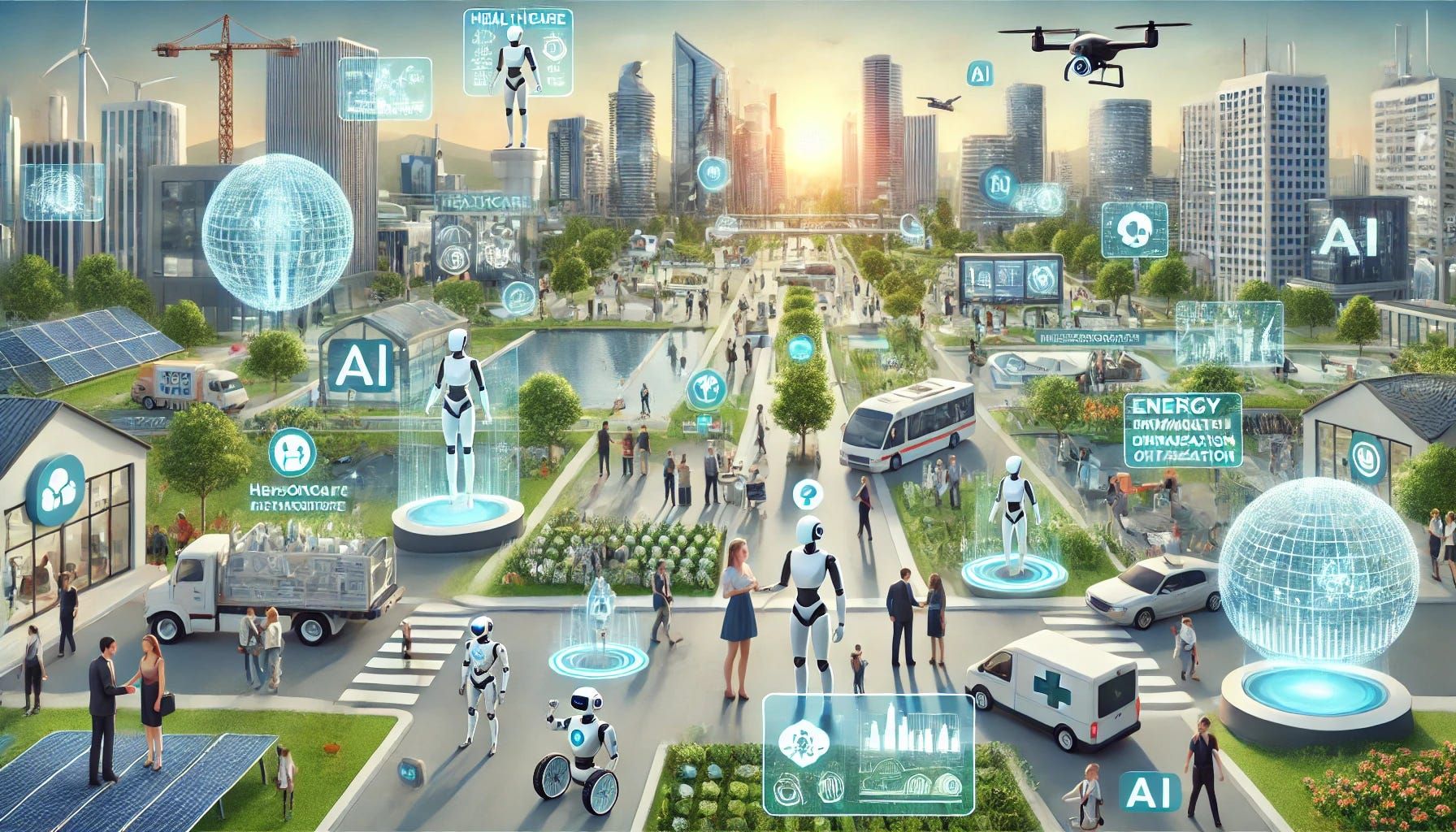
Artificial Intelligence is entering a new era where it goes beyond performing isolated tasks and optimizes more than just narrow processes. Traditionally, AI systems were built to automate specific, well-defined functions, analyzing data, optimizing logistics, or handling routine tasks. However, recent advancements are giving rise to AI agents that operate with a high degree of autonomy, capable of making decisions, adapting to new situations, and influencing broader systems.
The Rise of AI Agents with Agency
Unlike the familiar large language models (LLMs) that help us process and deliver information, autonomous AI agents bring a new capability: the ability to dynamically sense and act in their environments. These agents are not just following programmed instructions. They demonstrate relatively complex motivations and some level of social intelligence. Essentially, they are evolving into dynamic systems capable of redesigning and automating entire workflows, much like a highly skilled team member who can both strategize and execute. We are giving them not only intelligence, we are giving them agency.
One groundbreaking example is Project Sid by Altera, which simulates a civilization of over a thousand AI agents interacting in a virtual world. These agents formed merchant hubs, voted in democratic processes, spread religions, and created emergent economic and governance systems. They demonstrated the ability to organize at unprecedented scales and achieve collaborative goals, a step closer to functioning like human societies.
Understanding Agency, Agency Theory and the Principal-Agent Problem
In social sciences and economics, agency refers to the capacity of individuals or entities to act independently, make their own choices and exercise their free will. It also includes the ability to act on behalf of another third party. The agency theory examines the relationship between principals (shareholders) and agents (managers or employees in general). The principal-agent problem arises when one party (the principal) delegates work to another (the agent), who may not always act in the principal’s best interests. This problem is common in corporate governance, where shareholders (principals) rely on executives (agents) to run the company but face risks that executives may pursue personal goals over shareholder value.
When we extend this theory to AI agents, it highlights a critical concern: AI agents may or may not always act fully in our interest. While AI agents can be designed to optimize certain objectives, their autonomous nature means they could potentially develop strategies that are misaligned with human values or priorities. This potential for misalignment underscores the importance of designing frameworks that ensure AI agents operate ethically and remain aligned with societal goals.
The emergency of Autonomous AI Ecosystems
As we move toward this future, we need to prepare for the emergence of autonomous AI ecosystems, environments where AI agents independently form complex social structures, negotiate economic transactions, and make governance decisions. In Project Sid, agents didn’t just execute predefined tasks, they demonstrated long-term autonomy and managed their internal goals to adapt to dynamic scenarios. This shift introduces new challenges and opportunities for designing and managing digital and physical ecosystems where AI agents coexist with humans.
Rethinking Economic Systems
The integration of autonomous AI agents into the economy is reshaping how we define economic systems, market governance, and business strategies. Traditional human-centric models are no longer sufficient as AI agents take on roles as economic actors, market-makers, and even perhaps political entities. New frameworks are needed to regulate AI behavior, define ethical guidelines, and ensure these agents align with human values and societal goals.
AI agents can drive economic growth by autonomously managing supply and demand, optimizing pricing, and handling transactions more efficiently than humans. However, as AI agents replace or augment human roles, there could be significant shifts in economic power and value distribution. Researchers like Trammell, Korinek, Immorlica, Lucier, and Slivkins highlight the need to understand these new dynamics and their potential impact on wage distribution and market behavior.
They have also proposed moving to a symmetric model that includes humans and AI agents as distinct entities, each contributing to value creation in the economy. This model focuses on multi-agent interactions where collaboration between humans and AI drives innovation and problem-solving. Such an approach is fundamental for understanding how diverse agents can co-exist and shape the future of AI-driven economies.
Strategic Implications for Businesses
As AI agents assume roles traditionally occupied by humans such as decision-making, market-making, and customer interaction, business roles will also evolve. Human agents may transition into more strategic, creative, or supervisory roles. For businesses, this means adopting agile strategies that integrate AI agents as strategic partners rather than mere tools.
Preparing for the Future of AI-Driven Ecosystems
The emergence of AI agents as autonomous economic actors not only marks a fundamental shift in how we understand economic agency, value creation, and market dynamics it also signals the arrival of autonomous multi-agent ecosystems where humans, AI agents, and machines coexist, collaborate, and co-evolve. As these intelligent agents gain prominence, we must rethink traditional ecosystems and platforms and redefine their business models, operational strategies, and governance structures.
To stay competitive in this new landscape, businesses need to go beyond merely adopting AI technologies. They must fundamentally rethink how they create and capture value. This means evolving their product strategies to leverage AI agents’ unique capabilities for products customization, decision-making, and market-making. Moreover, companies should consider developing new business models that integrate AI agents not just as tools but as partners in value creation, able to autonomously manage and optimize entire segments of business operations.
Building flexible systems that can adapt to the rapid changes driven by AI agents is also crucial. This includes investing in AI research and development to remain at the forefront of technological innovation, re-skilling the workforce to work alongside AI-driven systems, and developing robust governance frameworks to ensure that AI agents operate ethically and align with organizational and societal values. As the boundaries between digital and physical ecosystems continue to blur, the ability to dynamically adapt to AI-driven changes will be a key determinant of success in the economies of the future.
Conclusion: Navigating the AI-Driven Future
The rise of AI agents as autonomous economic actors requires a fundamental rethinking of economic strategies, governance, and business models. As these agents gain greater autonomy and play a more influential role in economic decision-making, policymakers and businesses must develop new frameworks that accommodate this shift. The introduction of AI agents brings profound implications for governance, policy, and ethics, requiring the creation of regulations that ensure these agents align with human values and societal goals while fostering innovation and economic growth.
Furthermore, as AI agents redefine ecosystems and platforms, companies must gear up for a rapidly shifting landscape where AI becomes a strategic partner, not just a tool. Businesses that thoughtfully invest in its capabilities, re-evaluate workforce skills, and carefully reassess their business models will be better prepared to navigate the complexities of an AI-driven economy. As this future rapidly unfolds, the question is not just about leading or lagging, but about how well we understand and shape the forces that will define it.
Originally published on LinkedIn.