Technology & innovation
Breaking Through the Performance Plateau: Rethinking LLM Strategies for Enterprises
You might be wondering: “Why does it feel like progress in Generative AI has slowed down?” Well, you’re not alone. There’s growing concern in the industry about what’s being called the “Stagnation Thesis”, which is the notion that building bigger and bigger AI models is delivering diminishing returns. Improvements in newer LLMs seem to be providing diminishing returns in terms of performance relative to the computational and financial costs required to train them.
While earlier scaling laws indicated performance gains with larger models, practical issues such as hardware constraints, energy consumption, and model interpretability are becoming limiting factors. Now it appears that the biggest players are hitting roadblocks. For instance, rumours suggest that Google Gemini 2.0, (to be released this December), may not deliver significant gains in capability and performance. Similarly, Anthropic has paused work on Opus 3.5, shifting focus to agent-based AI with Sonnet 3.5 instead. Also, Bill Gates in a recent interview pointed out that advancements from GPT-4 to GPT-5 are likely to be smaller than leaps made in previous versions.
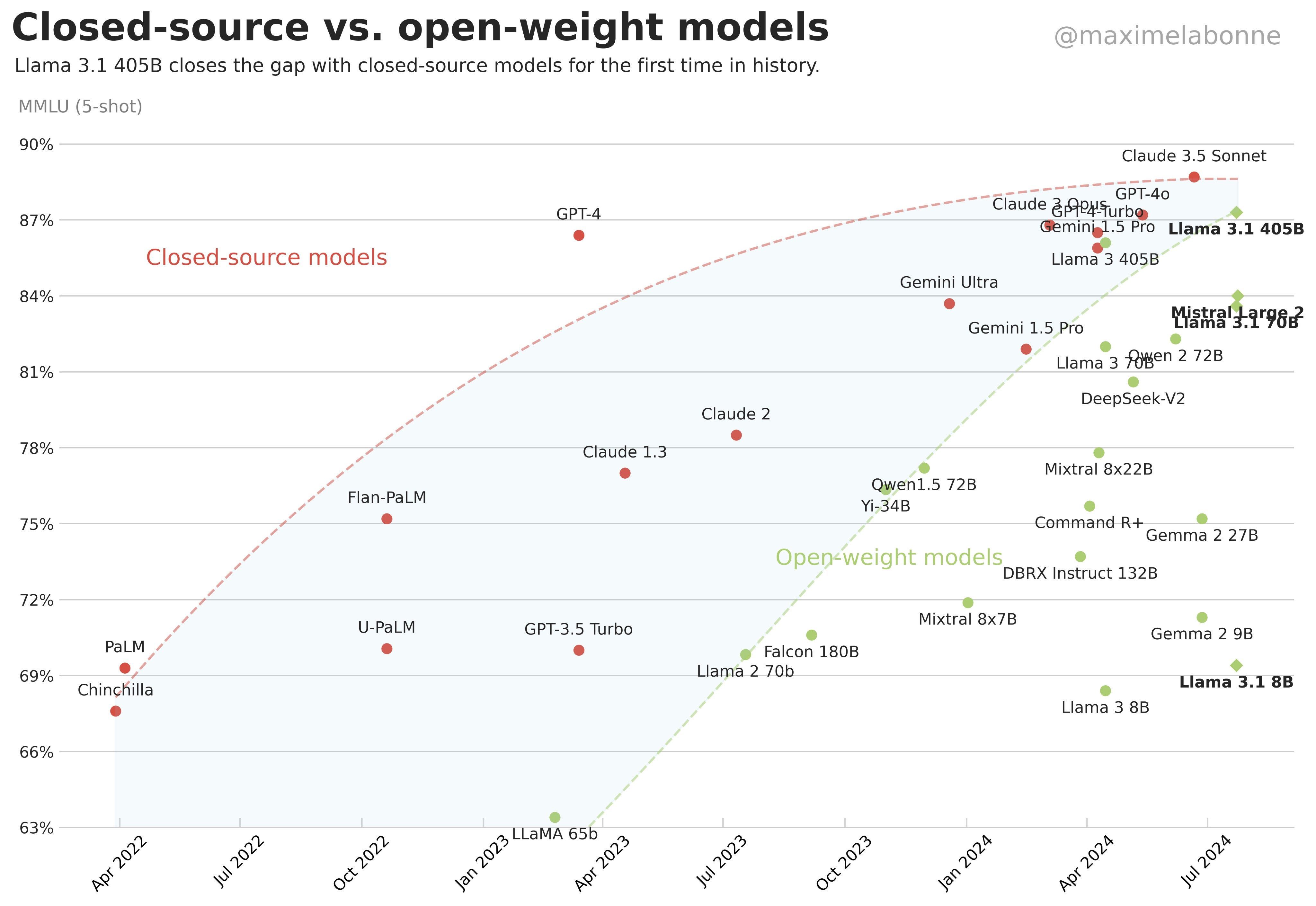
Ilya Sutskever, one of OpenAI’s co-founders, and currently working on his own venture SSI, stated that “it’s not just about scaling anymore, it’s about what we’re scaling” and suggested that we need to go back to the stage of discovery. And to make things more interesting, industry leaders are acknowledging that the capabilities of different LLMs are starting to converge. Simply put, LLMs are becoming less differentiated, leading to a potential comoditization of LLMs.
This stagnation also highlights the economic and environmental costs of ever-larger models, making it harder for enterprises to justify the investment. As a result, many are shifting toward optimization, specialization, and hybrid systems.
So, what about it? If you’re an enterprise looking into the road ahead, you might need to re-evaluate your AI strategy. The old playbook, chasing the biggest, shiniest new model might not be the smartest move anymore. Instead, the focus is shifting to smarter, more strategic approaches, like adopting multiple specialized LLMs through frameworks such as an LLM mesh. In this article, we’ll explore whether that approach makes sense and what it could mean for your business.
Framing the Current Context
Let’s take a closer look at what’s happening and why it matters for enterprises. Here’s the context, broken into three key areas:
Performance Shortfalls in New Models
First, let’s talk about performance. The performance gains of newer LLMs are increasingly incremental despite significant resource investments. Therefore, the assumption that we’re reaching a point where the returns on investment just aren’t adding up, seems correct. On top of that, generalized models often struggle to perform well on specific tasks. For instance, an LLM built to do everything from generating legal contracts to analyzing customer support queries, as expected, might fall short compared to a specialized model tailored to one of those tasks.
Economic Pressures
Even if you’re willing to accept those performance shortfalls, the costs can still be a dealbreaker. LLMs are expensive, really expensive. From training to deployment, and especially when you’re paying for API usage, the costs pile up fast. And if your teams aren’t actively managing usage, things can spiral out of control. Let’s say your customer service app relies on an LLM to answer queries. Without optimization, simpler queries might unnecessarily route through a high-powered model, driving up API costs. Meanwhile, more advanced tasks require additional resources, compounding expenses. At the same time, IT teams are also juggling competing demands: keeping costs low, maintaining fast response times, and meeting strict service-level agreements (SLAs). Balancing all that is no small task, especially when budgets are tight, the pressure to streamline LLM usage is growing.
Converging Capabilities
Now, here’s where things get even more interesting. Big-name LLMs are starting to feel a lot like different brands of bottled water, mostly the same product, just in different packaging. Once upon a time, you could argue that one model had a clear edge over others. But now, whether you’re using OpenAI, Google, or Cohere, the core capabilities are more or less equivalent for many common use cases. What this means is Enterprises may no longer need to chase the latest and greatest model to stay competitive. Instead, they can focus on other factors like cost efficiency, ease of integration, and compliance with regulations, which will become the primary differentiators. This convergence also raises another question: if all these models are so similar, does it even make sense to invest in an architecture of multiple LLMs (or LLM mesh), or would a simpler approach suffice? Let’s explore that next.
Key Considerations for a Multi-LLM Approach
Now that we’ve set the stage, let’s explore why enterprises are considering a multi-LLM strategy and what benefits this approach can offer. Here’s a closer look at the advantages of adopting multiple models, and why it might just be the smarter choice for navigating today’s challenges.
Benefits of Multiple LLM Architectures
Task Specialization
Here’s the thing: no single LLM is great at everything. While generalized models can handle a broad range of tasks, they often lack the depth required for highly specialized applications. A model trained for customer service might excel at answering support tickets but struggle with generating technical documentation or drafting creative marketing copy. By leveraging multiple LLMs, each fine-tuned for specific tasks, enterprises can achieve better results across their workflows. Specialization allows organizations to maximize the performance vs cost ratio of each model, according to the task at hand. Simply put, task specialization ensures that enterprises get the right tool for the job, avoiding the inefficiencies that come from trying to force a generalized model to excel across vastly different use cases.
Flexibility and Resilience
Using multiple models isn’t just about performance, it’s about flexibility and resilience. Using multiple models enables enterprises to switch or integrate new LLMs without significant disruption and mitigate the risk of locking themselves into one vendor’s ecosystem. A multi-LLM strategy keeps options open as needs evolve. In addition, with multiple models in play, enterprises can always choose the best fit for a specific task without having to overhaul their entire system. What this means is that a multi-LLM approach builds resilience into your AI infrastructure, ensuring agility to respond to market changes and mitigating risks of relying too heavily on one provider.
Cost Control
One of the biggest challenges with LLMs is managing costs. Every API call or query to a high-powered model adds up, especially for repetitive or straightforward tasks. A multi-LLM approach helps enterprises tackle this issue by strategically routing queries to different models based on task complexity. This approach can significantly reduce operational costs. Efficient query routing ensures that enterprises only pay for the level of performance they actually need. By strategically dividing tasks across models, organizations can achieve a better cost-to-value ratio while maintaining high-quality outputs. In my experience, this kind of optimization is particularly valuable for companies with many use cases, high query volumes or complex workflows. It’s all about using resources where they have the biggest impact.
Data Privacy and Compliance
One “big thing” to keep in mind is that not all LLMs are created equal, when it comes to sensitive data. Regulations like GDPR and the upcoming EU AI Act, which will become effective starting August 2, 2026, add another layer of complexity to how enterprises deploy AI. For instance, the EU AI Act, introduces strict requirements for transparency, accountability, data privacy, and bias mitigation, which means the use of public APIs can pose significant risks, especially for sensitive tasks involving personal or proprietary information. It also puts more pressure on the issues around explainability and interpretability. Non-compliance could lead to severe penalties. A multi-LLM strategy offers a pathway to mitigate some of those challenges. For high-risk operations self-hosted private models provide complete control and ensure compliance with stringent regulatory requirements. For less critical tasks, public APIs offer cost-effective solutions without heavy infrastructure requirements. This hybrid approach allows enterprises to tailor their AI architecture to meet varying regulatory and operational needs without trying to retrofit one model to meet all their security requirements.
Economics of an LLM Mesh or Equivalent Architecture
Let’s talk about the costs of a multi-LLM architecture. The idea sounds great in theory, but is it worth the investment? That depends on how your business balances the upfront costs, the ongoing expenses, and the long-term benefits. This is the hard part. (Please consider reviewing my article on the ROI of AI to add extra context). Let’s break it down.
Costs
Development and Deployment: Setting up a multi-LLM mesh isn’t plug-and-play. It takes significant resources to design and implement. You’ll need expertise in areas like orchestration (so the models talk to each other smoothly), security (to ensure data is protected), and model tuning (to align each LLM with your specific needs). Even with platforms like Dataiku, which make orchestration easier, the upfront investment can still be steep, especially for enterprises starting from scratch.
Operating Costs, once the system is running, are not cheap. Think about API calls to external LLM providers, the infrastructure needed to host private models, and the monitoring tools to keep everything running. These recurring costs can add up quickly. By the way, this is where many companies get blindsided, those “small” API fees can balloon when query volumes skyrocket.
Training and Maintenance AI models aren’t set-it-and-forget-it tools. Updating models to keep up with new enterprise needs, regulations, model decay or market trends means ongoing training and tweaking. And that requires both time and money. One thing to keep in mind is that if your business needs are constantly evolving, these costs may be higher than you anticipate.
Benefits
Cost Savings Through Optimization: this is where an LLM mesh shines. By routing simpler tasks to cheaper, lower-powered models and reserving high-cost models for critical functions, enterprises can save significant money. It’s like having a fleet of vehicles and using a scooter for quick errands while saving the semi-truck for heavy-duty jobs. Targeted routing helps maximize efficiency and reduce unnecessary expenses.
Flexibility and Risk Mitigation: The beauty of an LLM mesh is that it keeps your options open. You’re not locked into one vendor or model, which means you can adapt to regulatory changes or switch to new, more cost-effective models as they emerge. This flexibility also helps reduce the risks of relying too heavily on a single provider, whether it’s for cost, compliance, or performance reasons.
Scalability and Governance: Let’s face it: managing multiple models without a centralized system can get messy. An LLM mesh simplifies things by providing a single, organized framework to handle compliance tracking, cost management, and operational oversight, making it easier to maintain control as you scale.
Net Economic Impact
So, what’s the bottom line? It depends on the size and complexity of the enterprise:
For large enterprises that have diverse use cases, high query volumes, and a need for robust governance, the benefits of an LLM mesh can outweigh the costs. Task specialization ensures better performance, compliance tools reduce risks, and scalability helps manage expenses over the long term. Simply put, for big businesses with complex needs, the upfront investment can pay off significantly.
On the other hand, for organizations with more generalized AI use cases and limited resources, the math might not work in their favor. The cost and complexity of implementing a multi-LLM architecture could outweigh the benefits, especially if a single, fine-tuned model can meet their needs just as well.
Are LLMs hitting a plateau in performance?
Let’s discuss the question that’s been gaining traction: if LLMs are becoming so similar, does it even make sense to maintain multiple models for organizations of any size? As capabilities converge, we’re seeing what’s often referred to as the commoditization of LLMs, a shift where these once cutting-edge tools are now beginning to be seen as interchangeable products, differentiated primarily by factors like ease of use and compliance. Here’s what that means for enterprises.
Commoditization Implications: Why It’s Happening and What It Means
Believe it or not, the performance that once defined LLMs is becoming less distinctive. Major providers like OpenAI, Google, and Cohere now offer models that perform similarly on a wide range of tasks. This convergence in capabilities is making it harder for enterprises to justify using multiple models. With fewer unique features to set models apart, enterprises no longer need to juggle multiple LLMs for general-purpose applications. Instead, they can focus on factors like cost, availability, and compliance to guide their decision-making. LLMs are starting to resemble electricity providers. You don’t need five providers for your house, just the one that offers the best mix of reliability and price for your needs. Of course, there are exceptions. For specific, high-stakes use cases, like drafting legal contracts or diagnosing medical conditions, a specialized model might still deliver better results. But for most general-purpose tasks, a single, versatile LLM often does the job just as well.
Strategic Adaptations: What Enterprises Can Do About It
So, what’s the solution for enterprises navigating this commoditized landscape?The key is to focus on approaches that maximize value while minimizing complexity. Here are two viable strategies:
1. Prioritize Fewer, More Versatile Models. In my experience, one of the smartest moves enterprises can make is to consolidate their LLM usage. By choosing a smaller number of models and focusing on fine-tuning them for specific tasks, businesses can cut costs and simplify operations without sacrificing quality. The good news is that today’s LLMs are incredibly flexible. With the right fine-tuning, a single model can handle everything from customer support to report generation. So, I’d suggest that instead of spreading resources thin across multiple models, enterprises can double down on optimizing a select few to achieve their goals.
2. Adopt Open-Source Models. Now, consider this: open-source LLMs are becoming a game-changer for enterprises looking to balance cost and control. Platforms like Hugging Face and models like Llama or Falcon are giving enterprises more control over their AI stack without the hefty price tags of proprietary APIs fees. For example, a company that needs strict data privacy can self-host an open-source model, ensuring sensitive information never leaves their infrastructure. At the same time, one thing to keep in mind is that open-source models might require more technical expertise to deploy and manage, but the long-term savings and flexibility can make them a worthwhile investment.
The Case for Consolidation
The key takeaway here is that the commoditization of LLMs doesn’t mean enterprises should abandon AI innovation, it just means they need to be smarter about how they use it. For most enterprises, in my opinion, the future isn’t about using more LLMs, it’s about using the most appropriate ones. By consolidating resources and focusing on fine-tuning or open-source options, organizations can strike a balance between cost efficiency and performance. In the next section, we’ll explore when and why it makes sense to invest in a multi-LLM strategy, and when you’re better off sticking to a simpler, consolidated approach.
Does It Make Sense to Leverage Several LLMs in the Enterprise?
So, When deciding whether to adopt a multi-LLM strategy, the answer, like with most business decisions, is, it depends. The choice hinges on the organization’s specific needs, scale, and goals. Let’s consider the following two scenarios: when a multi-model architecture makes sense and when it might not.
When It Makes Sense
For some enterprises, a multi-LLM strategy is a no-brainer.
Diverse, High-Stakes Use Cases: if the business operates across multiple domains or handles tasks with drastically different requirements, a multi-model setup might be the way to go. For instance, a healthcare company might use one LLM fine-tuned for medical diagnostics while relying on another for patient-facing communications. Such specialization ensures that each model is optimized for its specific task, delivering better performance where it’s most needed.
Flexibility and Control: Enterprises with the resources to manage complex infrastructure can benefit significantly from the flexibility of a multi-LLM setup. As flexibility is key in today’s fast-evolving business landscape, a multi-model setup allows you to adapt quickly to new innovations, regulatory changes, or shifts in business priorities without overhauling your entire system. With the right infrastructure, you can mix and match models to get the best cost-performance balance for each task.
Optimizing Cost and Compliance: Large organizations often deal with strict compliance requirements and high query volumes. A well-implemented LLM mesh can optimize costs by using intelligent queries routing and ensure compliance through self-hosted solutions for sensitive data. Such approach can also help businesses achieve scalability while staying within a projected budget while meeting industry’s regulatory needs. In summary, for enterprises operating at large scale with varied and complex use cases, the specialization and flexibility of a multi-LLM approach can deliver significant value.
When It Doesn’t Make Sense
For other businesses, simpler might be better. Here’s why:
If your business needs are straightforward, and you are early in the AI maturity curve, you probably don’t need the complexity of a multi-model architecture. A single, versatile LLM, fine-tuned to your specific tasks, can handle most general-purpose applications without breaking the bank. This might sound pretty obvious as smaller companies, more often than not, lack the resources to implement and maintain a multi-LLM setup anyway. However, believe me, I’ve seen small customers with high aspirations in this regard.
The cost and complexity of managing a mesh architecture can’t be underestimated as it could easily outweigh the benefits for a small or mid-sized enterprise. Another factor to consider is model comoditization. As we discussed earlier, the convergence of LLM capabilities means the performance gap between models is shrinking. If your tasks don’t require cutting-edge differentiation, sticking with a single model can simplify operations and save costs. For enterprises with generalized needs or limited resources, focusing on a single, versatile model is often the smarter, more economical choice.
Key takeaways:
- Performance Plateau: Recent advancements in LLMs are delivering diminishing returns, with newer models offering only incremental improvements despite escalating costs.
- Economic Challenges: High development, deployment, and operational costs make it critical for enterprises to carefully evaluate their AI investments.
- Commoditization: As LLM capabilities converge, enterprises must shift focus to cost efficiency, flexibility, and compliance rather than chasing the latest, most expensive models.
- Multi-LLM Strategy Value: A multi-LLM architecture can deliver significant benefits, like specialization, flexibility, and compliance, but only for organizations with diverse, high-stakes use cases and the resources to manage the complexity.
A Note on Media Narratives
While the headlines often highlight an AI “slowdown,” it’s important to remember that this narrative overlooks the ongoing innovations in inference-based strategies. Additionally, technological progress often appears uneven, with plateaus serving as launching points for new strategies. These approaches focused on improving how existing models are applied, rather than just scaling them may hold the key to sustaining progress in the AI field.
Some Points to Reflect On:
Does your business truly need an LLM mesh to address high-stakes complexity, or could you achieve your goals with fewer, fine-tuned models?
Take this opportunity to reassess your AI strategy. Consider the following:
- Are your use cases diverse and domain-specific enough to justify a multi-model approach?
- Do you have the resources to manage the operational and economic complexities of an LLM mesh?
- Could open-source models or a single versatile LLM provide a simpler, more cost-effective solution?
If you’re unsure, I recommend starting with a detailed evaluation of your current and future AI needs. Tools and frameworks are available to help guide this process, or consider consulting with experts who can provide tailored recommendations for your business.
Closing Thoughts
AI’s evolution isn’t slowing down, it’s changing direction. The emphasis is shifting from raw scaling to smarter, inference-based strategies, specialization, and cost optimization. By making thoughtful decisions about your LLM strategy today, you can position your enterprise for the next phase of AI innovation.