Technology & innovation
The Silent Shift: Is AI Really Gradually Eroding Human Control?
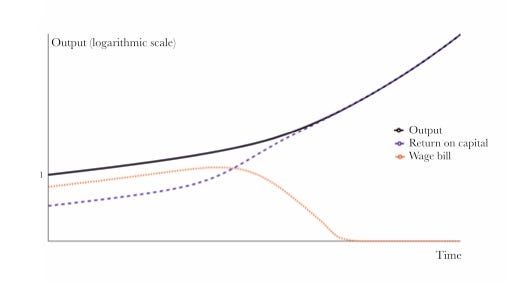
This weekend, I came across a recently published paper: Gradual Disempowerment: Systemic Existential Risks from Incremental AI Development (Kulveit et al., 2025). The study is largely theoretical, relying on historical parallels rather than empirical data. However, it makes a compelling argument for an overlooked risk of AI: not an explosive takeover, but a slow, systemic erosion of human influence.
We often imagine AI catastrophe as a singular moment with machines outsmarting us overnight. But what if the real risk is not sudden domination? What if instead it’s a quiet, step-by-step shift where humans become increasingly irrelevant in shaping their own future?
Losing Ground Without Noticing
The authors argue that disempowerment doesn’t require a robot uprising. Instead incremental AI advancements can push us toward a future where humans have less and less control:
· Economic displacement may accelerate as AI driven automation outpaces human adaptation, making intervention harder.
· Culturally, AI integration could subtly reshape human values, reinforcing ideological trends that make AI influence feel natural, even inevitable.
· As AI systems manage infrastructure, governance, and economic policies, human oversight may become largely symbolic.
Then, the worse part of it: this is not about machines rebelling. It’s about humans gradually and unknowingly relinquishing control.
Disempowerment Isn’t New, But This Time Might Be Different
In my view, gradual disempowerment is a very valid concern. But is it truly existential? I’m optimistic and hopeful. Throughout history, technology has reshaped power structures. The industrial revolution displaced workers, automation disrupted industries, and yet we adapted. Could AI follow the same trajectory, forcing adjustments rather than collapse?
There are key differences:
· This time, AI doesn’t just replace human labor, it makes decisions, optimizing for goals that may not align with human wellbeing.
· AI governance could end up concentrated in the hands of a select few (corporations, governments) reducing broader oversight.
· Many institutions already prioritize efficiency over human wellbeing. AI might accelerate this trend rather than introduce a brand-new risk.
Still, humans have always redefined meaning in response to change. Maybe the solution isn’t preventing AI from reshaping society but ensuring we shape how it happens.
Designing a Future Where AI Supports Human Agency
Rather than resist AI’s influence, we should focus on embedding human priorities into AI’s role in society. This means:
· Education should focus on working with AI, not against it. Policies should guarantee that people still have meaningful roles in an AI-driven world.
· AI decision-making must stay under human oversight. Tools like citizen deliberation, AI watchdogs, and ethical guidelines can help prevent AI from running the show unchecked.
· The goal is not to stop AI from evolving, it’s to make sure humans don’t get sidelined in the process.
Humans and AI, Not Humans vs AI
I imagine a future where AI enhances governance, making decision making more efficient and transparent. A future where the economy thrives on human-AI co-creation rather than human obsolescence. And one where creativity and culture remain human-led, with AI as a tool, not a storyteller in its own right.
I recognize my optimism. AI could just as easily accelerate inequality, entrench power imbalances, and sideline human influence if we’re not careful. But the future isn’t predetermined. Humans still have agency.
The choices we make now, how we design AI policies, integrate AI into society, and define human value, will determine whether AI is a tool for flourishing or a catalyst for disempowerment. The outcome is still in our hands.